
 Perth, WA
 Dunsborough & South West WA
 Sydney, NSW
 Melbourne, Victoria
 Sunshine Coast, QLD
 Darwin, NT

Contents
- Why is food truck insurance different from restaurant insurance?
- Types of insurance a food truck may need
- Protecting your fit-out, appliances and portable equipment
- Common food truck claims scenarios
- Check your certificates, limits and trading locations
- How much does food truck insurance cost?
- Information to have ready when requesting a quote
- Is food truck insurance mandatory in Australia?
- Food truck insurance questions
In short
A food truck may need public and products liability insurance, commercial vehicle insurance, equipment cover, business interruption insurance and workers compensation if it employs staff.
The right food truck insurance depends on how the business operates, where it trades and the value of the truck, fit-out, stock and equipment.
- Food truck insurance usually combines several types of cover.
- Public and products liability may respond to injury, damage or food-related claims.
- Commercial motor may cover the vehicle, while the fit-out can require separate cover.
- Machinery breakdown and stock deterioration may protect key equipment and food.
- Councils and event organisers may require evidence of liability insurance.
- Employers must consider the workers compensation rules in their state or territory.
Food trucks face a mix of hospitality, vehicle and mobile trading risks. This makes insurance for a food truck different from cover for a café or restaurant operating from fixed business premises.
If you operate a food truck, food van or food trailer, hospitality insurance may cover several parts of your business under an insurance solution suited to your operations.
- On the road
- Commercial vehicle risks
- At the window
- Public and products liability
- In the kitchen
- Equipment, stock and fire
- After a loss
- Income and recovery
Mobile trading
Why is food truck insurance different from restaurant insurance?
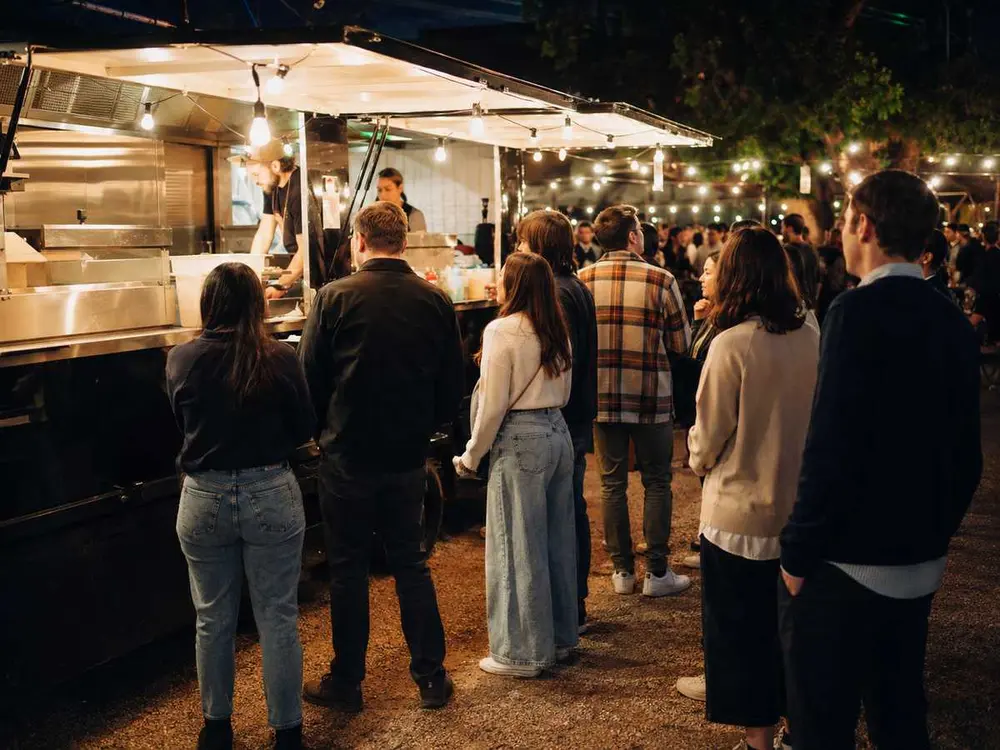
Food truck insurance needs to account for mobility. A restaurant usually operates from one fixed premises. A food truck can trade at an office park one day, a festival the next and a private event after that.
Because the premises, equipment and stock move together, one incident may affect several parts of the operation at once. A collision could damage the truck, fitted cooking equipment and stock inside while also preventing the business from attending booked events.
- Changing locations
- Markets, festivals, private functions and roadside sites can each have different conditions and insurance requirements.
- Equipment moves with you
- Refrigeration, cooking equipment, generators and POS systems may travel inside or alongside the truck.
- Trading conditions change
- Crowds, surfaces, electrical supply, generator use and available space can change at every location.
- One incident can stop trade
- Major damage to the truck can remove the entire business premises from operation.
Cover types
Types of insurance a food truck may need
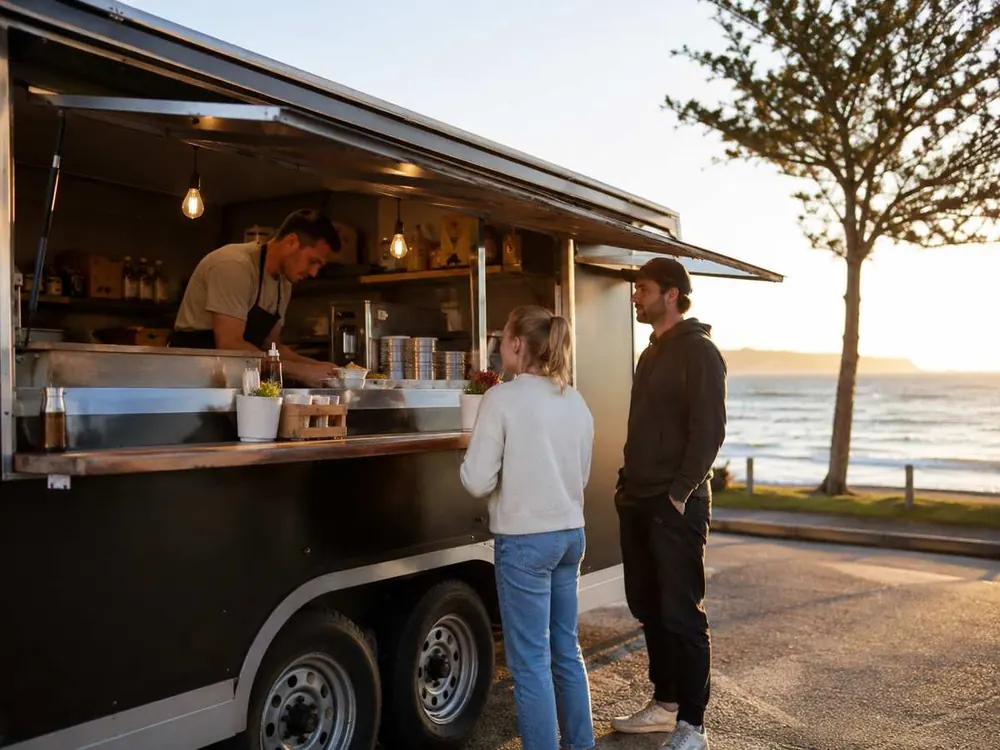
A food truck does not have one standard insurance package that suits every operator. A coffee van trading at office parks may have different risks from a large food truck attending festivals around Australia.
| Type of cover | What it may help protect | Example food truck risk |
|---|---|---|
| Public liability | Certain claims for third-party injury or property damage connected with your operations. | A customer slips near your service area or is burned by a hot item. |
| Products liability | Certain claims alleging injury or damage caused by food or drinks you sold. | A customer alleges food poisoning or an allergic reaction. |
| Commercial motor | The insured vehicle and certain liabilities arising from its use, subject to the selected cover. | The truck is damaged in a collision while travelling to an event. |
| Property and general property | Insured fit-out, appliances, portable equipment, signage, contents and stock. | A fire damages the cooking fit-out, POS system and serving equipment. |
| Machinery breakdown | Sudden and unforeseen breakdown of specified machinery, where insured. | A fridge, freezer, generator or coffee machine breaks down. |
| Stock deterioration | Insured perishable stock spoiled following a covered event. | Refrigerated ingredients spoil after an insured equipment failure. |
| Business interruption | Lost income and specified ongoing expenses after an insured event interrupts trade. | The vehicle cannot trade while insured fire damage is repaired. |
| Workers compensation | Statutory cover for eligible work-related injuries or illnesses. | An employee suffers a burn, cut or lifting injury while working. |
| Cyber insurance | Certain cyber incidents, data losses and response costs. | An online ordering, POS or customer-data system is compromised. |
Important
Cover varies between insurers. Limits, excesses, exclusions, conditions and waiting periods may apply. A claim is only covered where the circumstances fall within the terms of the policy.
Public and products liability
Public liability may cover certain legal liabilities when a third party claims your business caused injury or property damage. Examples include a customer slipping near the serving area, hot food causing an injury or a cable creating a trip hazard.
Products liability applies to certain claims connected with food and drinks supplied by the business. Read more about public liability insurance.
Commercial vehicle insurance
A food truck is both a place of business and a commercial vehicle. Options may include comprehensive cover, third-party fire and theft, or third-party property damage, depending on the insurer.
When arranging commercial vehicle insurance, disclose that the vehicle operates as a food truck and provide details of the permanent fit-out.
Machinery breakdown and stock
Machinery breakdown may protect certain insured machinery after a covered breakdown. Stock deterioration may help cover spoiled refrigerated or frozen stock in some circumstances. The cause of the failure and policy wording will determine whether a claim is covered.
Business interruption
Business interruption may help with certain lost income and ongoing costs after an insured event stops the truck from trading. Check the insured events, benefit period and limits, as it does not cover every reason a business stops trading.
Workers compensation
Food truck businesses with employees need to consider workers compensation obligations under the relevant state or territory scheme. Grace Insurance can help businesses understand their workers compensation insurance options.
Cyber insurance
Food trucks increasingly rely on EFTPOS terminals, online ordering, delivery platforms, POS software and customer data. Cyber insurance may cover certain financial losses and response costs following an insured cyber event.
Fit-out
Protecting your fit-out, appliances and portable equipment
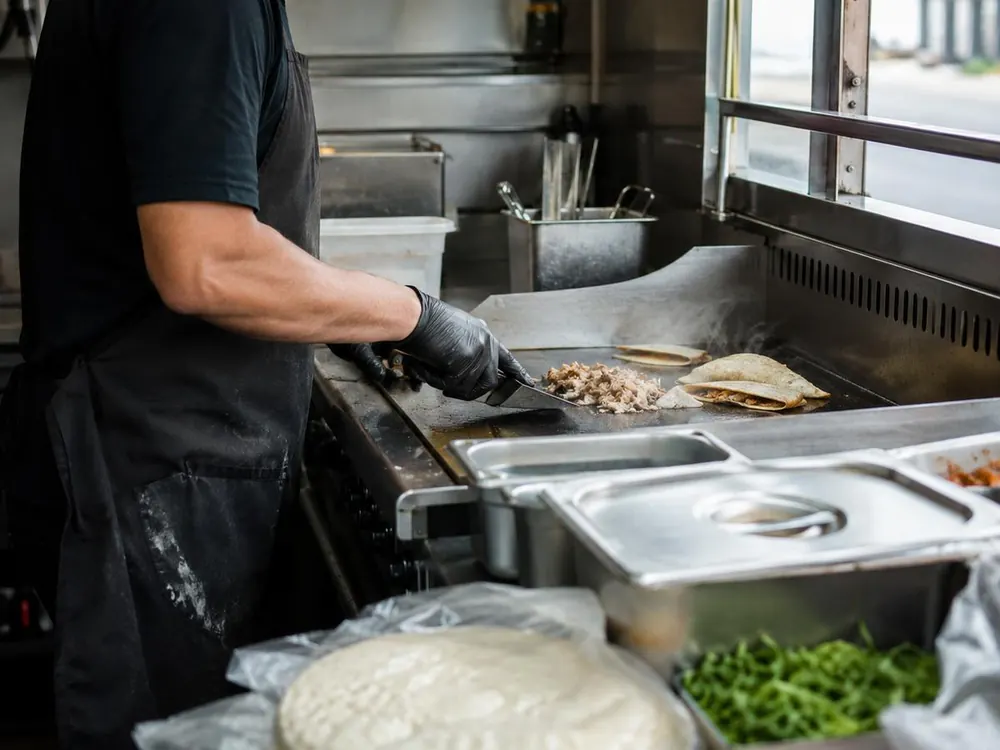
The equipment inside a food truck can represent a large share of its value. Refrigeration, coffee machines, fryers, grills, extraction systems, generators, sinks, tanks, POS hardware and custom cabinetry may be expensive to repair or replace.
Do not assume every item permanently fitted to the truck is automatically included under commercial motor insurance. Likewise, portable items used outside the truck may need to be listed or insured under a different section. A broker can help clarify where the vehicle ends and the business property begins for insurance purposes.
Equipment checklist for your broker
- Cooking and extraction equipment
- Fridges, freezers and cool rooms
- Coffee machines and grinders
- Generators, batteries and solar systems
- POS devices and mobile electronics
- Gazebos, furniture, signs and barriers
- LPG bottles, water tanks and pumps
- Stock kept in the truck or off-site
Claims
Common food truck claims scenarios
Thinking through realistic incidents can make it easier to identify gaps before they become costly.
- Customer injury
- A customer trips over a power lead or claims they were burned by a hot drink. Public liability may respond, depending on the circumstances and policy terms.
- Food-related allegation
- Several customers allege illness after eating food you supplied. Products liability may help with an insured claim and associated defence costs.
- Kitchen fire
- A cooking fire damages the fit-out, appliances and vehicle. Multiple policy sections may need to work together to cover insured damage.
- Theft overnight
- Portable equipment, a generator or stock is stolen from the truck or storage location. Cover can depend on security conditions and where the items were kept.
- Equipment failure
- A refrigeration unit fails before a major event, damaging stock and stopping trade. Machinery breakdown and stock deterioration may be relevant.
- Road accident
- The truck is damaged on the way to a booking. Commercial motor may cover insured vehicle damage, while interruption cover may be separately relevant.
Before you trade
Check your certificates, limits and trading locations
Event organisers, markets, landlords and councils may ask for a certificate of currency showing specified liability limits or interested parties. Requirements can vary, so check the contract or site rules early.
- Trading locations
- Tell your broker about markets, festivals, private sites and interstate travel.
- Contract requirements
- Share event agreements or lease clauses that specify insurance conditions.
- Certificates of currency
- Allow time for certificates or policy changes before the booking date.
Cost
How much does food truck insurance cost?
The price depends on the individual business and the cover selected. Two food trucks with similar menus may have very different premiums because of their vehicle value, fit-out, turnover, equipment, trading locations or claims history.
- Vehicle and replacement value
- The truck’s age, type, modifications, fit-out and agreed or market value.
- Business activities
- The food prepared, cooking methods, alcohol sales, catering work and event types.
- Turnover and staffing
- Annual revenue, customer volume, employee numbers and wage details.
- Cover limits and excesses
- The types of cover, insured values, liability limits, sub-limits and excess selected.
- Claims and risk controls
- Claims history, storage, alarms, extinguishers, maintenance, LPG management and food-safety procedures.
The clearest way to understand the cost is to provide accurate details and request a tailored quote. Grace Insurance can help compare options and explain the differences between policies.
Quote
Information to have ready when requesting a quote
Good information helps insurers assess the risk accurately and reduces the chance of important assets or activities being missed.
- Vehicle registration, year, make, model and current value
- Fit-out details, equipment list and replacement values
- Menu, cooking methods and any LPG or deep-frying use
- Annual turnover, wages and employee numbers
- Trading areas, event types and overnight storage address
- Previous claims or losses and current insurance details
- Security, maintenance and fire-protection arrangements
- Required liability limits or interested parties in contracts
Requirements
Is food truck insurance mandatory in Australia?
Australia does not have one insurance rule that requires every food truck to hold the same policies. Requirements can depend on the state or territory, whether you employ staff, the vehicle you operate, the council area, where you trade, and event or venue rules.
Markets, councils and event organisers may set their own public liability requirements. For example, the City of Perth Food Vendor Notification requires food stall and food truck operators to provide evidence of current public liability insurance. This does not mean every Australian council has the same requirement or requires the same level of cover.
Insurance is also separate from food-safety and registration responsibilities. Food Standards Australia New Zealand states that mobile food businesses must meet the same food-safety requirements as other food businesses. Operators need to notify the council where the vehicle is garaged and may also need to notify other councils where they intend to trade.
Before a new location
Before trading at a new location, check the council requirements, vendor terms, required public liability limit, certificate of currency requirements and whether the organiser must be noted as an interested party.
Practical risk controls
Good maintenance, safety procedures and records can help reduce incidents and support a smoother claim.
- Fire protection
- Maintain extinguishers, fire blankets and extraction systems.
- Regular servicing
- Service the vehicle, generator and cooking equipment.
- LPG and fuel safety
- Store fuel safely and inspect connections for leaks.
- Food procedures
- Record temperatures and follow allergen procedures.
- Customer areas
- Use cable covers, barriers and clear queue areas.
- Asset records
- Keep receipts, serial numbers and equipment photos.
Related cover
Useful sources
General information only: This article does not take into account your objectives, financial situation or needs. Policy coverage is subject to the relevant terms, conditions, limits and exclusions. Consider the Product Disclosure Statement and seek professional advice before deciding whether a product is suitable for you.

Frans is the Director of Grace Insurance, the company he founded in 2015 in Perth.